Minimally Invasive Brain Surgery – Advanced Care by Dr. Venkatesh Yeddula
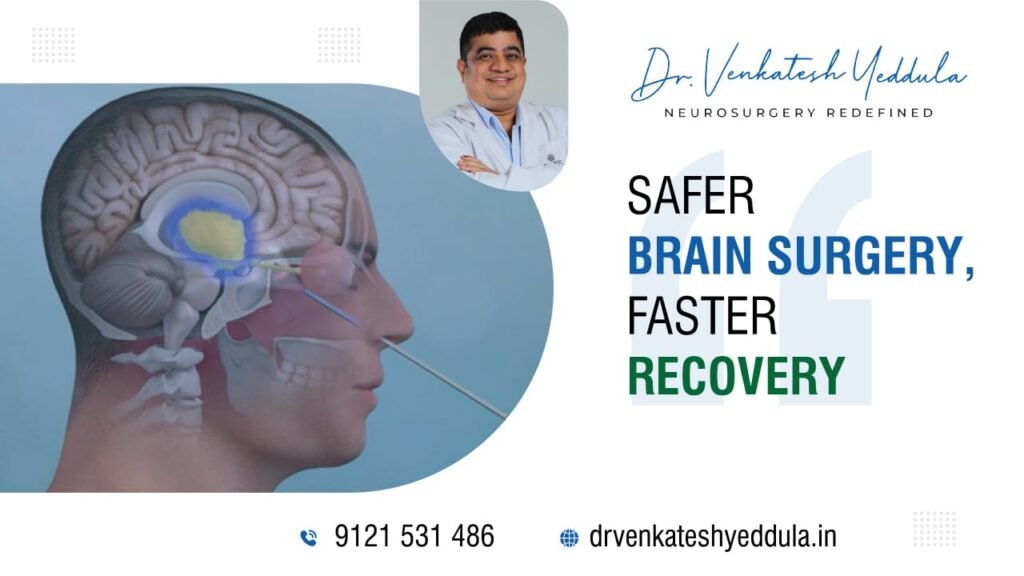
Brain surgery is a critical procedure often required for treating brain tumours and various complex neurological conditions. Traditionally, this meant large incisions, removal of part of the skull, and a lengthy recovery. However, with modern medical technology, surgeons can now perform minimally invasive brain surgery, which uses smaller openings, precision tools, and high-definition imaging to achieve excellent results with less trauma to the brain.
Conditions That Can Be Treated with Minimally Invasive Brain Surgery
The brain is the body’s control centre, responsible for every movement, thought, and vital function. When a brain tumour or other abnormality develops, it can affect these functions and cause serious health issues.
Dr. Venkatesh Yeddula uses minimally invasive surgical techniques to treat conditions such as:
- Brain tumours (cancerous and benign)
- Brain cysts
- Stroke-related complications
- Epilepsy
- Brain aneurysms
- Pituitary tumours
- Sinus carcinomas
- Hydrocephalus
For many patients, these procedures can be performed through natural pathways like the nose or mouth, avoiding large external incisions and promoting faster healing.
Benefits of Minimally Invasive Brain Surgery Over Traditional Methods
While traditional open brain surgery is still necessary in some cases, it typically involves larger incisions, longer hospital stays, and greater post-operative discomfort.
Minimally invasive brain surgery offers significant advantages, including:
- Smaller “keyhole” openings
- Reduced blood loss during surgery
- Less disruption to surrounding brain tissue
- Faster recovery — many patients are discharged in just 2–3 days
- Lower risk of infection and surgical complications
Who Can Benefit from Minimally Invasive Brain Surgery?
Not every case is suitable for a minimally invasive approach. Tumours in certain upper brain regions may still require open surgery. This advanced method is most effective for:
- Tumours at or near the skull base
- Growths behind the eyes, nose, or ears
- Lesions near the lower part of the brain
Before recommending surgery, Dr. Venkatesh Yeddula conducts a thorough evaluation, considering the tumour’s size, location, patient’s overall health, and neurological symptoms.
Specialized Minimally Invasive Procedures by Dr. Venkatesh Yeddula
- Endoscopic Neurosurgery – Uses a small camera-equipped endoscope to operate through tiny openings or natural body passages.
- Endonasal Surgery – Removes tumours via the nasal passage using high-definition visualization.
- Transorbital Surgery – Accesses growths near the skull base or behind the eyes through an eyelid crease incision.
- Keyhole Craniotomy – A small eyebrow incision provides access to frontal brain areas.
- MRI-Guided Laser Ablation – Targets and destroys deep-seated tumours using laser energy for precision treatment.
About Dr. Venkatesh Yeddula – Leading Neurosurgeon in Hyderabad
Dr. Venkatesh Yeddula, MBBS, MS (General Surgery), M.Ch (Neurosurgery), is a Senior Consultant Neurosurgeon with over 24 years of expertise in brain and spine surgery. Practicing in Banjara Hills, Hyderabad, he is renowned for his precision, compassionate care, and use of the latest minimally invasive neurosurgical techniques.
Patients from across India seek his expertise for safe, effective, and advanced treatment of complex neurological conditions.
📞 Schedule Your Consultation Today
If you or your loved one is facing a brain tumour or any neurological disorder requiring surgical intervention, contact Dr. Venkatesh Yeddula for world-class, minimally invasive care.