

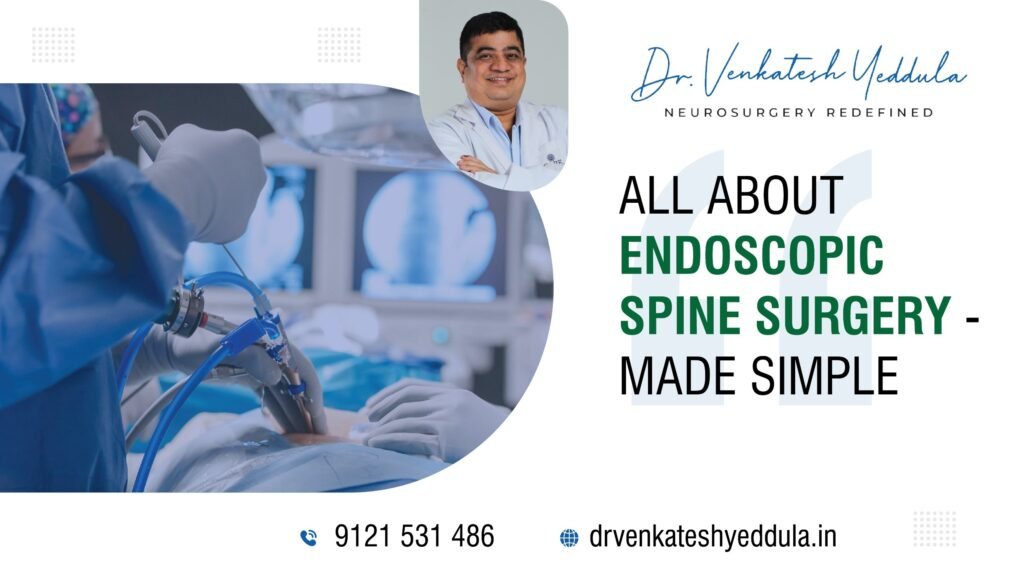
Endoscopic Spine Surgery – A Comprehensive Guide by Dr. Venkatesh Yeddula
If you have been diagnosed with a spine condition that causes severe pain, numbness, or other troubling symptoms, endoscopic spine surgery may be the right solution. This advanced minimally invasive procedure allows for faster recovery, less pain, and reduced scarring compared to traditional spine surgeries. It is performed by making a very small incision in the spine, enabling the surgeon to treat the issue with precision.
Conditions Treated with Endoscopic Spine Surgery
Endoscopic spine surgery is effective for patients who experience back pain due to conditions such as:
- Bone spurs
- Sciatica
- Herniated discs
- Bulging discs
- Spinal stenosis
- Foraminal stenosis
- Facet joint syndrome
- Chronic facet disease
- Radiculopathy
Since this surgery requires a unique skill set and advanced expertise, it’s important to choose a highly experienced neurosurgeon.
Benefits of Endoscopic Spine Surgery
- Faster recovery
- Less pain
- Reduced risk of infections
- Minimally invasive
- Limited blood loss
- Low risk of deep tissue infection
- Preserves spinal mobility
- Reduced scarring compared to traditional procedures
- Reduced tissue dissection
- Minimal muscle trauma
How Endoscopic Spine Surgery is Performed
Endoscopic spine surgery uses a specialized device called an endoscope — a small 7mm tube equipped with a high-resolution camera and light. Before the procedure, the surgical site is numbed with local anesthesia. A small incision is made to insert the endoscope. Depending on the diagnosis, the surgeon may access the spine through either the intralaminar or transforaminal method.
Images from the endoscope are projected onto a monitor, allowing the surgeon to clearly view the spine and identify the problem. Using specialized instruments, issues such as bone spurs, herniated discs, or ligament problems are treated. Once the surgery is complete, the instruments are removed and the incision is closed with sutures.
Recovery After Endoscopic Spine Surgery
Most patients can return home within two days of the procedure. Activities such as bending, lifting, and twisting should be avoided for a few weeks. Physiotherapy may be recommended to restore mobility and strengthen the spine. Daily activities can typically be resumed after two weeks, although athletes may require a longer recovery period.
Success Rate of Endoscopic Spine Surgery
Endoscopic spine surgery has shown high success rates in reducing pain and improving spinal mobility. While the procedure is generally safe and effective, selecting an experienced neurosurgeon is crucial to minimizing risks and achieving the best outcomes.
Endoscopic Spine Surgery vs. Minimally Invasive Spine Surgery
The main difference between these two techniques is the incision size. Endoscopic spine surgery requires a smaller incision compared to minimally invasive spine surgery, leading to faster recovery and less tissue trauma.
Consult Dr. Venkatesh Yeddula for Endoscopic Spine Surgery
If you are suffering from back pain and wish to learn more about endoscopic spine surgery, consult Dr. Venkatesh Yeddula. With over 31 years of experience, Dr. Yeddula is one of Hyderabad’s leading neurosurgeons, specializing in advanced spine procedures. He focuses on using the latest minimally invasive technologies to improve patient recovery and long-term outcomes.
📞 Call today to schedule your consultation.